

Menu

By Peyton Linn, Melrose Feed Mill & Affiliate Farms
Bedding plays a large role in turkey production. It’s more than just a floor covering, litter directly affects bird comfort, air quality, health, and overall performance. Poor bedding conditions can lead to bird health challenges, while well managed litter helps growth, bird welfare, and flock uniformity throughout the bird's life.
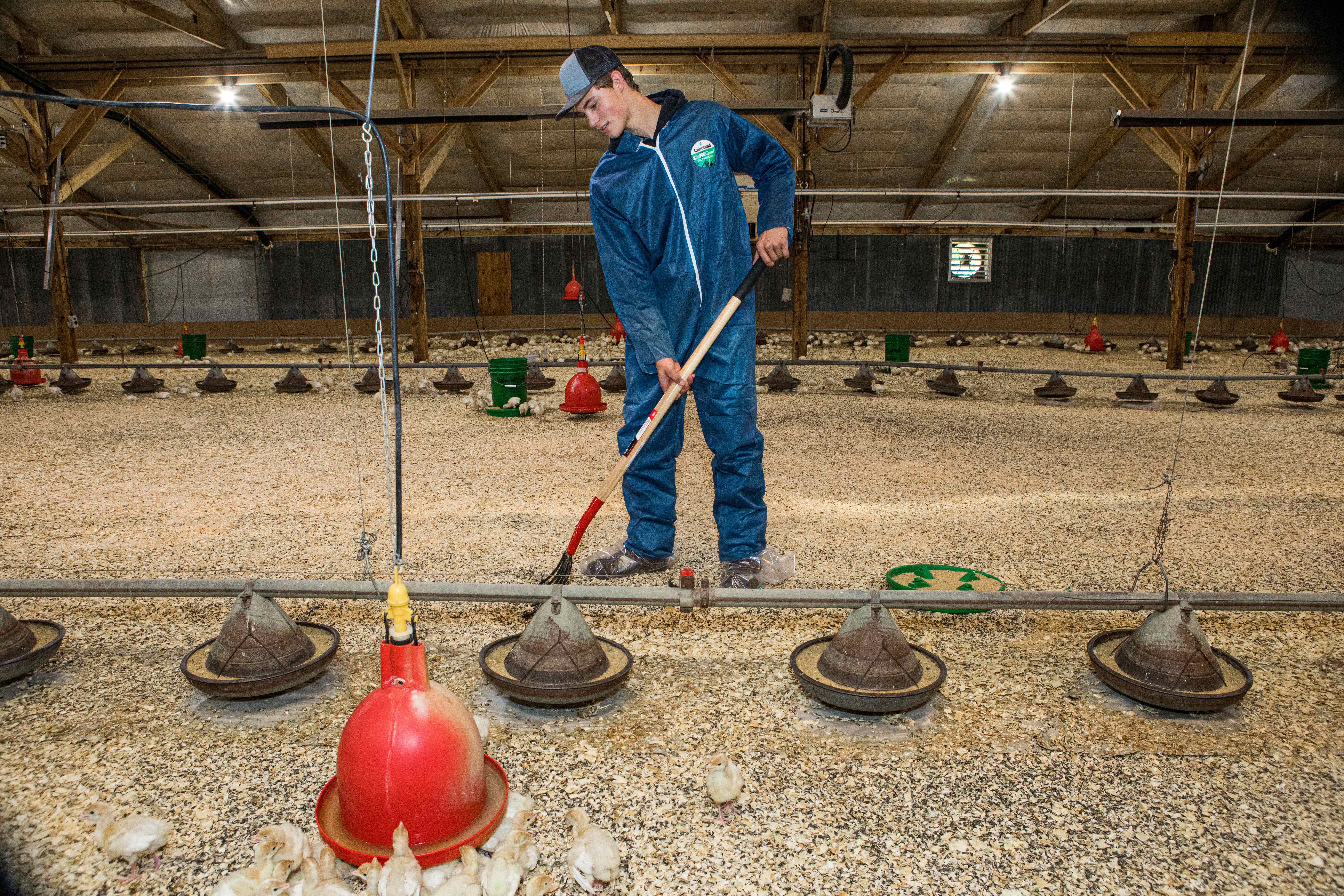
Turkey bedding is a mixture of sunflower hulls, pine wood shavings, manure, feathers, spilled feed, and moisture. When properly managed, the shavings absorb moisture and insulate birds from the floor, and help prevent direct contact with the barn floor. The sunflower hulls help keep everything loose and helps prevent caking under the drinkers. All of this can help protect birds from footpad burns and breast blisters.
Problems start to happen when litter becomes too wet or too dry. Wet litter makes ammonia conditions worse, which irritates the eyes and lungs which can stunt growth and the immune system. Extended exposure to high ammonia levels increases the risk of respiratory disease. Wet conditions can also be breeding ground for Dermatitis, which can be very costly throughout the life cycle of the flock. On the other hand, really dry bedding creates dusty conditions. Dust can carry bacteria and irritate the lungs of both birds and the farmer. The goal of bedding management is to keep litter in a condition that is dry and comfortable for the birds.
Controlling bedding moisture is the most important part of bedding management. Ideal litter moisture allows the material to lightly cling together when squeezed. This balance helps reduce ammonia production while reducing dust.
Water is the primary source of excess litter moisture. Drinkers should be properly adjusted for height and pressure to reduce spillage, and water lines should be inspected regularly for leaks. If you happen to have a water leak you should try to re-bed the wettest areas with bagged shavings to help soak up excess moisture. Poor drinker management is one of the most common causes of wet litter.
Ventilation also has a major role. Proper amounts of airflow removes moisture and ammonia from the Barn. Reducing ventilation too fast during cold fronts, can lead to moisture buildup and poor air quality. It’s a lot easier to control bedding conditions in the warmer months. Moving larger amounts of air across the barn can reduce most of the moisture in the barn. Maintaining proper ventilation protects both litter condition and bird health.
Litter conditions should be monitored daily as birds grow and manure output increases. Caked or compacted areas are hard to dry and increase ammonia release. Raking or tilling with a small tiller
can help break up these areas and can help draw out moisture in the litter. In the brooder barn I like to remove as much of the hard caked litter out of the barn as possible.
Good gut health also helps litter quality. Birds with a good gut health produce firmer droppings, reducing moisture load in the litter. Running pre and probiotics weekly can help with creating a healthy digestive system.


